

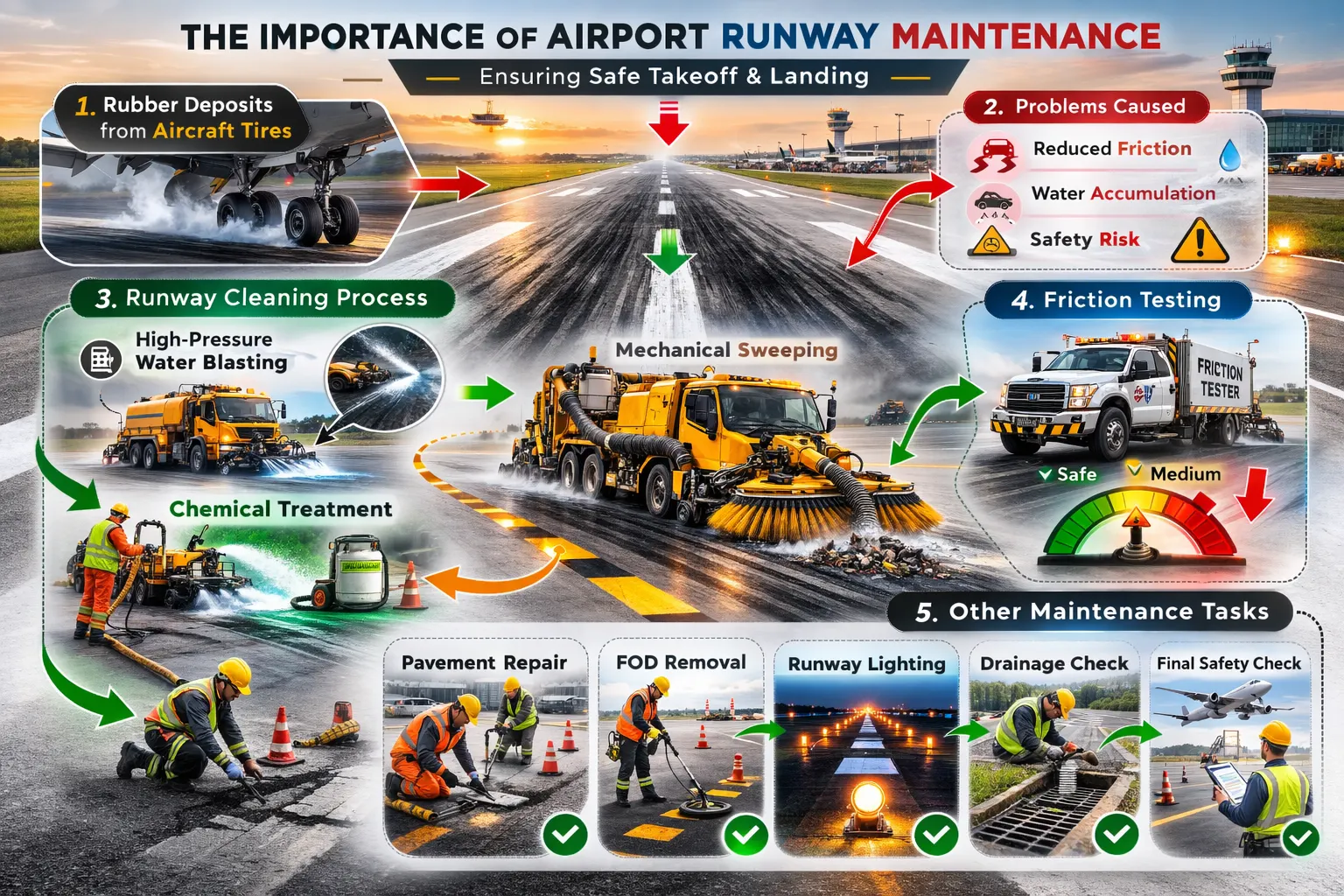
Air travel is one of the safest modes of transportation in the world, but behind every safe takeoff and landing lies a massive effort that passengers rarely see—airport runway maintenance. While aircraft technology often gets the spotlight, the condition of the runway itself plays an equally critical role in aviation safety.
Every day, thousands of aircraft land on runways at high speeds, leaving behind rubber deposits, debris, and surface wear. Without regular maintenance, these factors can compromise traction, drainage, and overall operational safety. That is why airports around the world invest heavily in specialized equipment and maintenance procedures.
Why Runway Maintenance Matters
When an aircraft lands, its tires hit the runway at speeds of 200–280 km/h. During touchdown, the tires spin from zero to full rotational speed instantly, which causes rubber from the tires to deposit on the runway surface.
Over time, these rubber deposits can create a smooth layer on the pavement that reduces friction. This is especially dangerous during rain, as reduced friction increases the risk of hydroplaning, where aircraft tires lose contact with the runway surface.
Regular runway maintenance helps ensure:
- Maximum braking efficiency
- Safe aircraft control during landing
- Improved drainage and reduced water accumulation
- Longer runway lifespan
The Problem of Rubber Deposits
One of the biggest challenges airports face is runway rubber buildup.
Every landing leaves small amounts of tire rubber behind, particularly in the touchdown zone, where aircraft wheels first contact the runway.
Over months of heavy traffic, these deposits accumulate and form thick black streaks on the pavement. If left untreated, they can significantly reduce runway friction.
Airports conduct regular friction testing to monitor runway grip levels. When friction drops below acceptable limits, rubber removal operations are scheduled immediately.
How Airports Remove Runway Rubber
Modern airports use several advanced methods to remove rubber deposits safely without damaging the runway surface.
1. High-Pressure Water Blasting
One of the most effective methods is ultra-high-pressure water blasting.
Specialized machines spray water at extremely high pressure (often over 40,000 PSI) to break down rubber deposits and wash them away. This technique is environmentally friendly and widely used across international airports.
2. Chemical Rubber Removal
Some airports apply specialized chemical solutions that soften rubber deposits. After the chemical reaction loosens the rubber, runway sweeper machines remove the residue.
3. Mechanical Sweeping
Heavy-duty runway sweeper trucks equipped with rotating brushes and vacuum systems collect debris, dust, and loose rubber particles. These machines are essential for maintaining runway cleanliness between major cleaning operations.
Runway Sweepers: The Airport’s Cleaning Fleet
Runway sweepers are powerful vehicles designed specifically for aviation environments. Unlike regular street sweepers, these machines are built to operate on large airport surfaces and handle aviation debris.
Their key features include:
- Rotating industrial brushes to scrub runway surfaces
- High-capacity vacuum systems to collect debris
- Water spray systems to control dust
- Wide cleaning paths for efficient coverage
Some airports even operate convoys of sweepers that clean entire runways in a single coordinated operation.
Beyond Cleaning: Other Runway Maintenance Tasks
Runway maintenance is not limited to rubber removal. Airports must also monitor and maintain several other factors:
Pavement Inspections
Engineers regularly inspect runways for cracks, potholes, and surface deterioration.
Foreign Object Debris (FOD) Removal
Small objects like bolts, stones, or metal fragments can damage aircraft engines and tires. Continuous FOD inspections help eliminate these hazards.
Runway Lighting Maintenance
Runway edge lights, centerline lights, and approach lighting systems must function perfectly to guide pilots during night operations or low visibility conditions.
Drainage Management
Proper drainage prevents water accumulation and reduces the risk of hydroplaning during rain.
Technology Is Transforming Runway Maintenance
Modern airports are increasingly using advanced technologies to improve runway maintenance efficiency.
Some innovations include:
- Automated runway inspection vehicles
- Friction measurement sensors
- GPS-guided sweeper machines
- AI-based surface damage detection
These technologies help airports identify maintenance needs faster and keep runways operational with minimal downtime.
The Future of Airport Surface Maintenance
As global air traffic continues to grow, runway maintenance will become even more important. Airports are investing in smarter equipment, eco-friendly cleaning technologies, and predictive maintenance systems to ensure safe operations for millions of passengers every day.
While travelers rarely think about the runway beneath their aircraft, these carefully maintained surfaces are essential to aviation safety.
In many ways, runway maintenance crews and their specialized machines are the unsung heroes of the aviation industry, working behind the scenes to keep the world flying safely.

Leave a Reply